
- Arrest Records
- Judgments
- Bankruptcies
- DUIs & DWIs
- Felonies
- Warrants
- Jail Records
- Lien Records
- Sex Offenses
- Misdemeanors
- Criminal Records
- Federal Dockets
What are West Virginia Court Records?

West Virginia is the 12th-least populous state, with a population of about 1.7 million residents. The state operates a two-tiered trial Court system consisting of the Supreme Court of Appeal, the Intermediate Court of Appeals, the Circuit Courts, the Family Court, and the Magistrate Court. West Virginia's trial courts handle over 160,000 caseloads annually.
In West Virginia, court records are generally accessible to the public. Residents can visit the courthouses to view these records. West Virginia's court records constitute:
Case Files/Information
These documents have detailed information about a legal case, including the people involved, case numbers, filing dates, and case types.
Dockets
Dockets are lists of court events, hearings, and scheduled proceedings. They provide an overview of case progress and upcoming activities.
Judgments and Orders
These documents contain information on court decisions, rulings, and outcomes. Judgments determine who is responsible and any resulting payments or punishments, while orders address the procedures during a lawsuit.
Transcripts
Transcripts are exact records of what is said in court, including during hearings, trials, and when judges make decisions. They document spoken testimony, arguments, and judicial rulings.
Evidence
Court records that contain evidence shown during trials, such as exhibits, photos, or expert reports.
Court Minutes
Minutes summarize court sessions, noting actions taken, motions filed, and discussions held. They provide a concise account of what transpired during hearings.
Pleadings
These legal documents are filed by parties or attorneys and include complaints, indictments, motions, orders, and jury verdicts.
Briefs
Attorneys write briefs to present legal issues, relevant facts, and persuasive reasoning to appellate courts. Briefs are an important part of appeals.
Types of Court Cases
Court cases in West Virginia are categorized based on the nature of the issue being addressed. However, there are two primary types of court cases in West Virginia:
Criminal Cases
Criminal cases involve actions that are considered offenses against the state. These cases are brought to trial by the government and can lead to penalties, including fines, imprisonment, or other forms of punishment. Magistrate courts handle preliminary hearings in felony cases and minor criminal matters. Circuit Courts handle all felony cases and appeals from the magistrate courts, and the Supreme Court of Appeals handles appeals of criminal cases from lower courts.
Criminal cases in West Virginia include:
- Felonies (Rape, murder, drug trafficking, burglary, homicide, and kidnapping)
- Misdemeanor (petty theft, disorderly conduct, simple assault)
- Domestic violence
- Juvenile crimes committed by minors
- Traffic cases involving DUI
Civil Cases
Civil cases in West Virginia are non-criminal disputes between individuals and organizations, seeking monetary compensation, property recovery, or specific performance rather than criminal penalties. Smaller claims are handled by Magistrate Courts, while more significant disputes are taken to the Circuit Courts. Family-related issues are addressed in the Family Courts.
In certain instances, cases may also be heard by the West Virginia Supreme Court of Appeals if they are appealed. Some examples of civil cases include:
- Contract disputes
- Family Law cases
- Probate and Estate cases
- Civil rights cases
- Defamation cases
- Property disputes
What Are the Different Courts in West Virginia?
West Virginia has a unified court system with a five-justice Supreme Court of Appeals, an Intermediate Court of Appeals, circuit and family courts, and magistrate courts. The judiciary's appropriation for fiscal year 2025 was about $166 million.
| Court Level | Court Name | Jurisdiction | Key Functions |
|---|---|---|---|
| Appellate | Supreme Court of Appeals | Statewide; highest court | Reviews appeals, makes court rules and oversees the state court system. |
| Appellate | Intermediate Court of Appeals | Appeals in civil, family, workers' compensation, administrative and guardianship cases; no criminal or original jurisdiction | Issues a written opinion on every case properly before it. |
| General Jurisdiction | Circuit Courts | Felonies, misdemeanors, civil cases over $7,500, and writs such as habeas corpus and mandamus | Trial courts of record; also hear appeals from magistrate and municipal courts and domestic violence family court decisions. |
| Limited Jurisdiction | Family Courts | Divorce, annulment, paternity, custody, support, name change and infant guardianship | Holds final hearings in civil domestic violence cases; can refer parents to mediation. |
| Limited Jurisdiction | Magistrate Courts | Civil disputes under $10,000, misdemeanors and preliminary felony examinations | Issues warrants, sets bail, hears small claims and presides over emergency domestic violence proceedings. |
How Many Federal Courts Are in West Virginia?
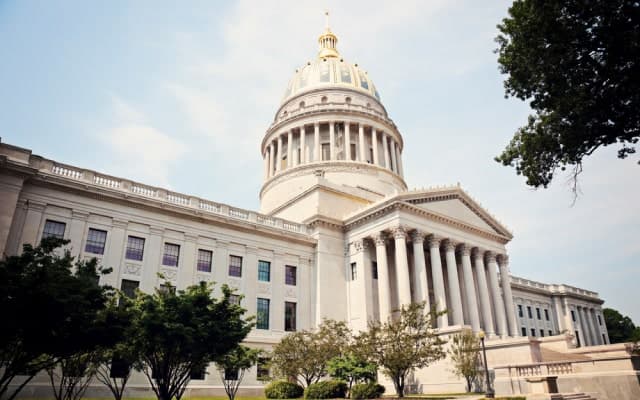
West Virginia is served by two federal district courts:
The U.S. District Court for the Northern District of West Virginia handles federal cases originating in the northern part of West Virginia. It deals with both civil and criminal cases under federal law. The District was established on June 22, 1901. The Northern District has four courthouses: Clarksburg, Elkins, Martinsburg, and Wheeling.
Like the Northern District, the U.S. District Court for the Southern District of West Virginia deals with both civil and criminal matters under federal jurisdiction. The District was established on June 22, 1901, and the Court is held at Beckley, Bluefield, Charleston, and Huntington.
The districts are within the Fourth Circuit situated in Richmond, Virginia, a judicial region that includes multiple states in the Mid-Atlantic and Southeastern United States.
How Many Court Cases Are Filed Each Year in West Virginia?
West Virginia courts handle an estimated ~190,000 new cases a year, mostly in magistrate court, with clearance rates around 100%.
| Case Type | Annual Filings | % of Total | Common Offense/Subtype | Clearance Rate |
|---|---|---|---|---|
| Traffic | ~45,000 | ~23.7% | Misdemeanor traffic, DUI, driving on a suspended license | ~100% |
| Criminal | ~60,000 | ~31.6% | Misdemeanors in magistrate court and circuit felony indictments | ~100% |
| Civil | ~35,000 | ~18.4% | Contract, tort, collections and magistrate civil suits | ~100% |
| Small Claims | ~15,000 | ~7.9% | Magistrate court claims up to $10,000 | ~100% |
| Domestic Relations | ~15,000 | ~7.9% | Divorce, custody, support, domestic violence petitions | ~100% |
| Juvenile | ~8,500 | ~4.5% | Delinquency, status offenses, abuse and neglect | ~100% |
| Other | ~11,500 | ~6.0% | Mental hygiene, guardianship, probate and appeals | ~100% |
| Total | ~190,000 | ~100% | — | ~100% |
How Do I Look Up Court Cases in West Virginia?
There are several methods available for searching court cases in the state of West Virginia.
West Virginia Judiciary Website
Visit the West Virginia Judiciary website to gain access to official court case records. On the website, you have the option to search for specific cases using the case number, party name, or attorney name.
- Go to the "Public Resources" section.
- Select "Case Information".
- Use the search tool to find the specific case by entering the required details.
For older records, residents may need to visit the courthouse where the case was filed and can request to view the records in person.
West Virginia State Law Library
The West Virginia State Law Libraryis a valuable resource for anyone seeking to conduct legal research. It provides a wide range of materials, including access to court opinions, case law, statutes, regulations, and legal encyclopedias.
PACER (Public Access to Court Electronic Records)
For federal cases in West Virginia, court records can be accessed through the Public Access to Court Electronic Records (PACER) system. PACER is a national database that allows users to view and download case and docket information from U.S. District, Bankruptcy, and Appellate courts online.
County Clerk's Office
For local cases, residents can visit or contact the County Clerk's Office in the specific county where the case was filed. Many County Clerk's Offices have online systems available to access case information. Alternatively, residents can visit the office "in person", where staff can assist with inquiries.
Number of Active Judges — State & Federal
West Virginia's state judges are chosen in nonpartisan elections, while federal district judges are nominated by the president and confirmed by the U.S. Senate. The counts below are authorized state judgeships and magistrates, which are approximate for magistrates.
| Court | Jurisdiction | Active Judges | Selection Method |
|---|---|---|---|
| Supreme Court of Appeals | Statewide appellate | 5 | Nonpartisan statewide election, 12-year term |
| Intermediate Court of Appeals | Statewide intermediate appellate | 3 | Nonpartisan election, 8-year term |
| Circuit Courts | General jurisdiction trial courts (31 circuits) | 75 | Nonpartisan election, 8-year term |
| Family Courts | Family law (27 family court circuits) | 47 | Nonpartisan election, 8-year term |
| Magistrate Courts | Limited jurisdiction (small claims, misdemeanors) | ~158 | Nonpartisan election, 4-year term |
| U.S. District Court, Northern District of West Virginia | Federal trial court | ~3 | Nominated by the President, confirmed by the Senate, life tenure |
| U.S. District Court, Southern District of West Virginia | Federal trial court | ~5 | Nominated by the President, confirmed by the Senate, life tenure |
| Total Active Judges | — | ~296 | — |
What Court Records Are Not Available to the Public in West Virginia?

In West Virginia, the majority of court documents are considered public records and can be accessed or duplicated under the Freedom of Information Act. However, there are some exceptions to this rule. Some records not available to the public include juvenile court records, documents involving minors, and any records containing financial accounts or Social Security numbers.
In cases of divorce, records are not accessible to the public until twenty-five years after a divorce. Only authorized persons can request for this record before the designated length of time, with proof that they are eligible to receive information about the record. These records are made public after the given time frame, except they are under seal.
Average Case Processing Time & Clearance Rates
Processing time in West Virginia varies by case type, from weeks for magistrate court matters to over a year for contested circuit court cases. The values below are estimates based on typical dispositions.
| Case Type | Court Level | Average Processing Time | Description | Clearance Rate |
|---|---|---|---|---|
| Traffic & Parking | Limited Jurisdiction | ~30–60 days | Most infractions are resolved by payment of a fine, a deferral or a short hearing before a judge or magistrate. | ~100% |
| Small Claims | Limited Jurisdiction | ~45–90 days | Informal hearings on small money disputes, usually decided at a single hearing or by default or settlement. | ~100% |
| Misdemeanor Criminal | Limited Jurisdiction | ~60–150 days | Most cases end in a guilty plea or dismissal after arraignment and a pretrial conference; few go to trial. | ~100% |
| Civil Cases | General Jurisdiction | ~12–24 months | Cases move through pleadings and discovery; most settle or are dismissed before trial. | ~100% |
| Domestic Relations | General Jurisdiction | ~4–9 months | Divorce and custody cases are mostly settled by agreement or mediation; contested cases need a final hearing. | ~100% |
| Felony Criminal | General Jurisdiction | ~6–12 months | Cases begin in a preliminary stage and mostly end in plea agreements; a small share go to jury trial. | ~100% |